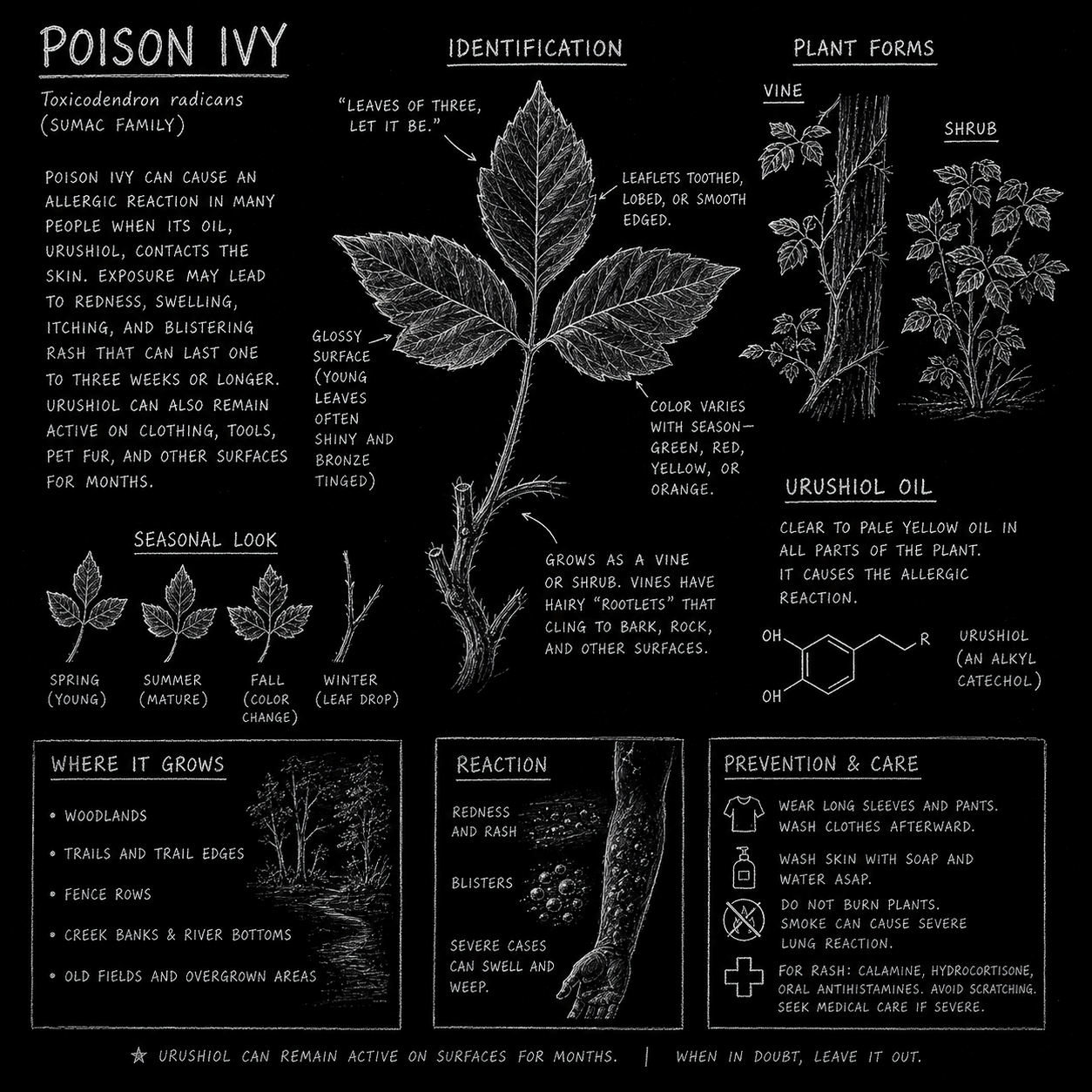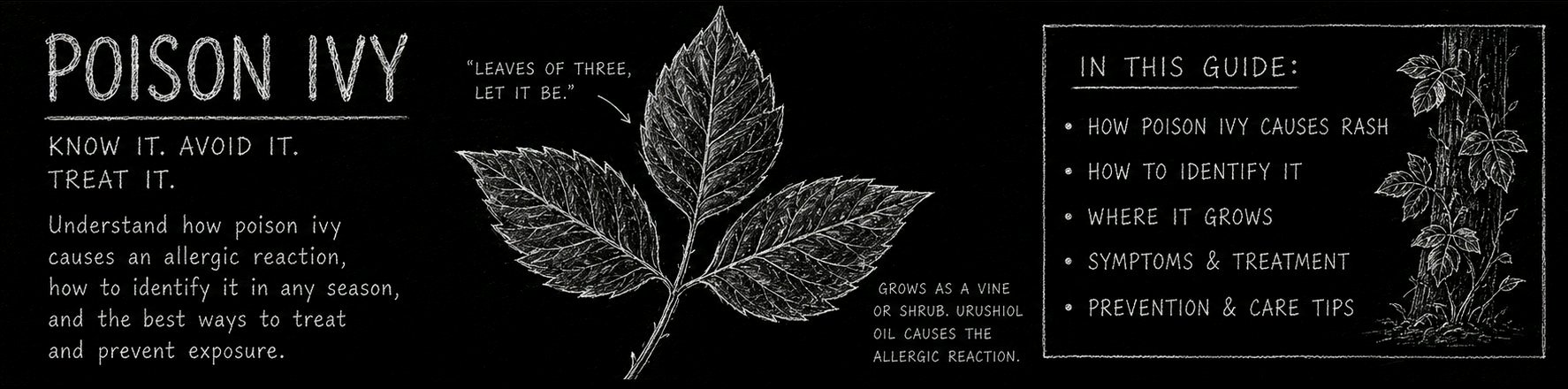
Poison ivy is one of those plants that can turn a good day in the woods into a miserable week afterward. The trouble comes from an oil in the plant called urushiol. Get it on your skin and, if you’re sensitive to it, you may wind up with redness, swelling, relentless itching, and blisters. The rash usually hangs around for a week or two, sometimes longer.
One thing you definitely don’t want to do is burn poison ivy. The oil can travel in the smoke, and breathing it into your lungs is a whole different level of trouble. If you’ve been around burning poison ivy and start having difficulty breathing, that’s a medical emergency.
Most encounters aren’t quite that dramatic, but a bad rash can still put a damper on fishing, hiking, camping, or working around the property. Scratching until the skin breaks can also open the door to infection. Some folks barely react to poison ivy while others seem to break out just looking at the stuff, and sensitivity can change over time.
The other aggravating thing about urushiol is how long it can stick around. It can ride home on boots, pants, gloves, tools, a dog’s coat, or just about anything else that brushed against the plant. You can remove the vine and still get a rash later from handling the gear you used to do it.
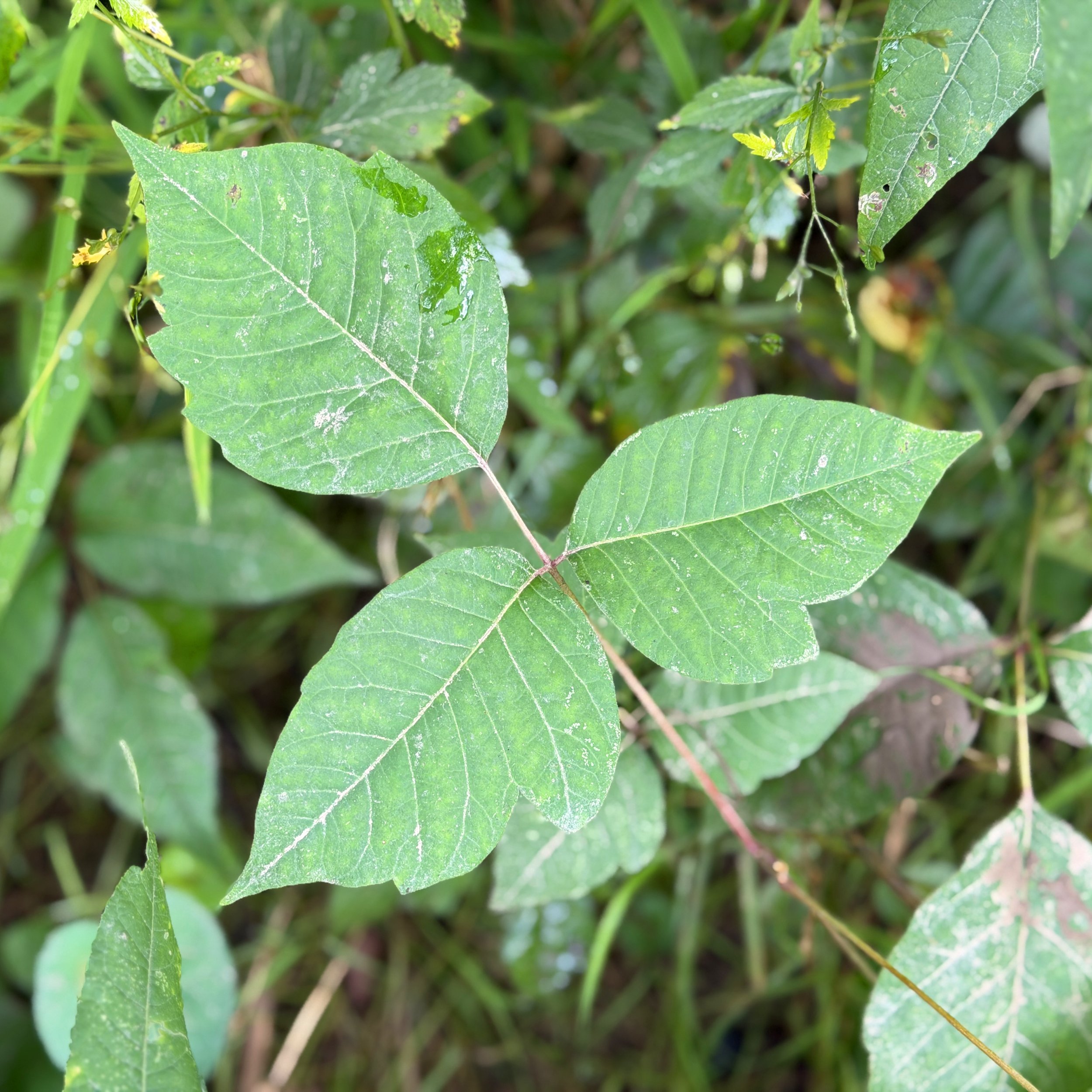
Fortunately, poison ivy gets easier to recognize once you’ve seen enough of it. The old saying “leaves of three, let it be”is still a good place to start. Each leaf is made up of three leaflets, and those leaflets might be smooth, toothed, or slightly lobed. New spring growth can have a reddish cast, summer leaves are usually green, and in fall they may turn yellow, orange, or red.
You’ll find poison ivy in plenty of places outdoors—along trails, creek banks, woodland edges, fence rows, brush piles, and other disturbed ground. Sometimes it creeps along low to the ground. Sometimes it grows like a shrub. And sometimes it climbs a tree as a thick, hairy-looking vine. Later in the year it may also carry clusters of pale or whitish berries, another good clue.
Just don’t rely on one clue alone. Plenty of harmless plants can fool you from a distance. Look at the leaves, the way the plant grows, the stem, and the surrounding habitat before deciding what you’re dealing with.
The best treatment is still not touching it in the first place. When you’re busting through brush or working somewhere poison ivy is common, long pants, sleeves, and gloves are worth the trouble. Barrier products containing bentoquatamcan add another layer of protection if you know you’re headed into it.
If you think you’ve brushed against poison ivy, wash up as soon as you reasonably can. Soap and lukewarm water can remove the oil before it gets a good hold, and sooner is better. Don’t forget your clothes, boots, gloves, tools, and anything else that may have touched the plant. If the dog went charging through a patch of it, the dog may need a wash too—even though the dog probably won’t get the rash.
Once a rash starts, calamine lotion or an over-the-counter corticosteroid cream can help take the edge off the itching. Oral antihistamines may also help, especially when the itching is keeping you awake.
Most cases are just uncomfortable and eventually run their course. But if the rash is widespread, involves the face, looks infected, causes major swelling, or you’re having any trouble breathing, it’s time to get medical help rather than trying to tough it out.