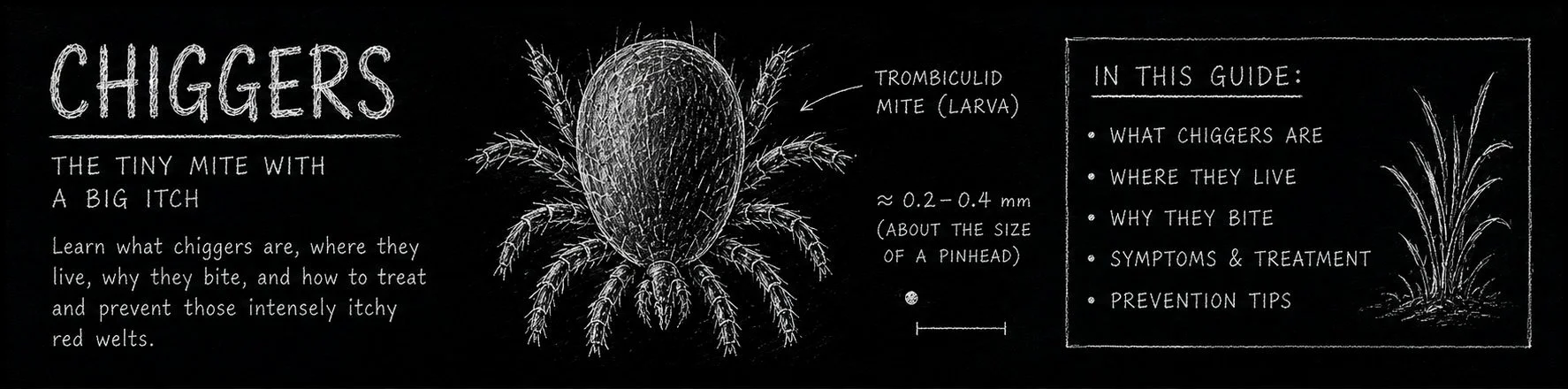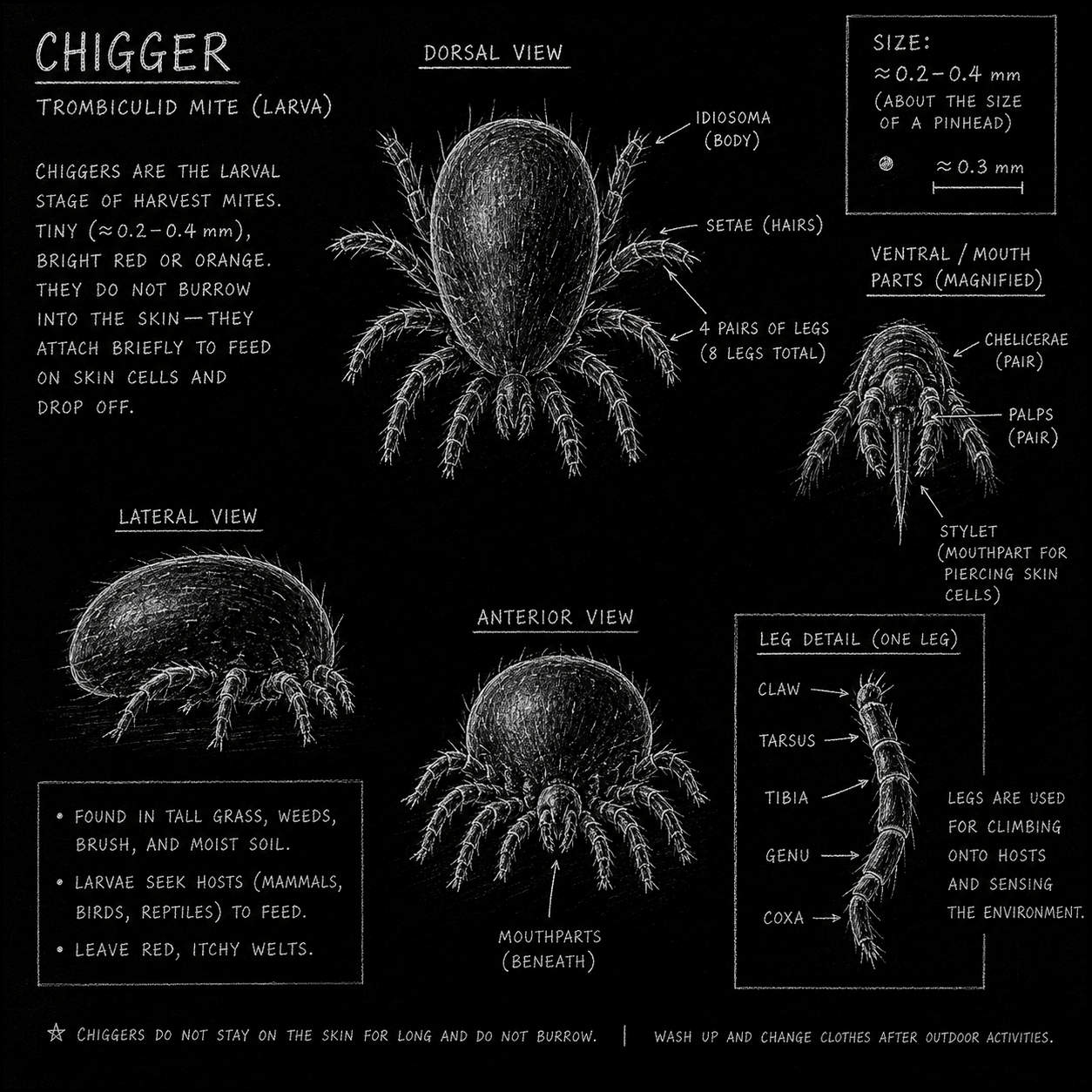
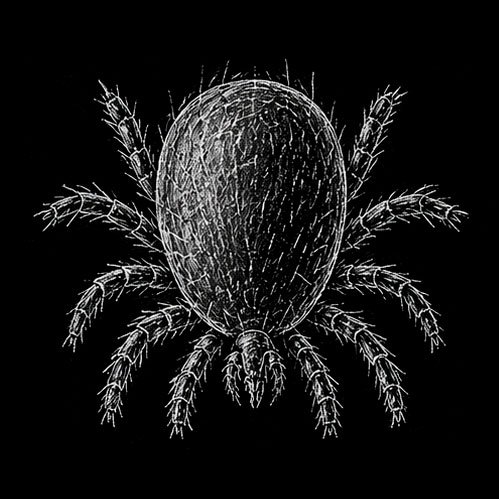
Chiggers are one of those little backwoods aggravations that can turn a good day outdoors into several days of scratching. They’re tiny mites—so small you’ll probably never see them—and they tend to hang out in tall grass, weeds, brushy creek banks, and other damp, overgrown places. They usually get you around the ankles, waistline, behind the knees, or anywhere clothing fits tight against the skin.
Despite the old stories, chiggers don’t burrow into your skin and stay there. They attach briefly and use their saliva to break down skin cells they can feed on. By the time those angry red welts start itching, the chigger has generally already dropped off. That’s also why painting a bite with nail polish or trying to “smother” the chigger doesn’t do much besides make you smell like a manicure.
The itching can be downright fierce and often gets worse during the first day or two. Red bumps may stick around for a week or two, sometimes longer if you keep scratching them. Washing up with soap and water after coming out of the woods can remove chiggers that haven’t settled in yet, and the clothes you were wearing should go through the wash rather than getting tossed over a chair for tomorrow.
Once the bites show up, treatment is mostly about keeping the itching under control while your skin sorts itself out. A little 1% hydrocortisone cream, calamine lotion, or a cold compress can take the edge off. An oral antihistamine can help when the itching is especially bad. The important part is trying not to scratch the bites raw, because broken skin can become infected.
Prevention is considerably easier than dealing with a couple dozen bites afterward. Long pants, tucked or snug cuffs, and insect repellent can help when you're pushing through tall grass or brush. Pay particular attention to the transition zones between maintained ground and thick vegetation—exactly the sort of places you find along creeks and riverbanks.