

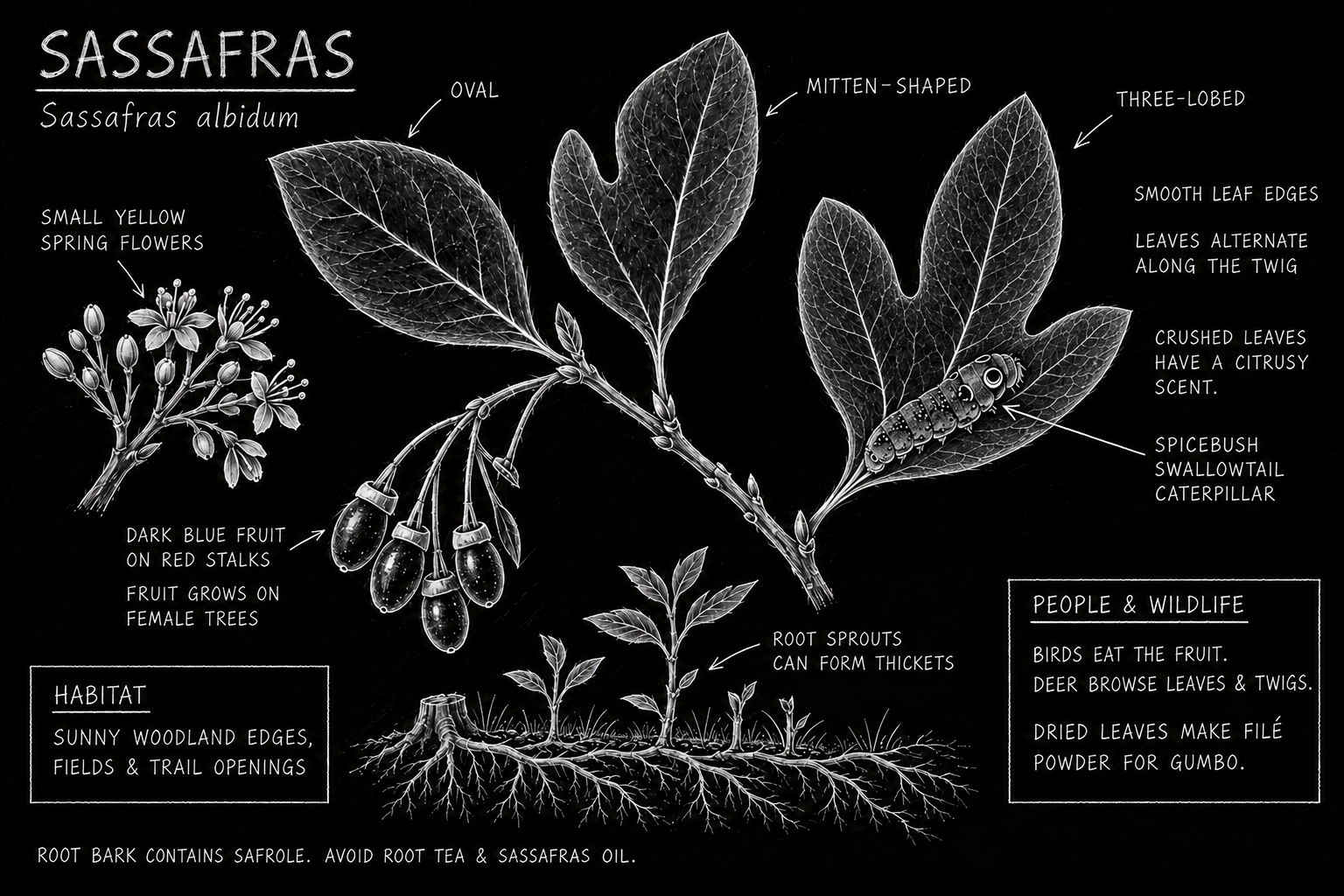
Sassafras is one of the easiest trees to recognize. It’s the only one I know of that grows three totally different leaves. Triple-lobed, mitten and oval. You can’t mistake the shapes. The edges are smooth, the leaves alternate along the twig, and a crushed leaf smells like citrus. I see them at the edges of trails, fields, any sunny opening where shoots rising from the same plant can form a little thicket.
Small yellow flowers appear in spring, and female trees can later produce dark blue fruits held on bright red stalks. Birds, including wild turkeys, eat the fruit, while deer browse the leaves and twigs. Sassafras also feeds spicebush swallowtail caterpillars, making it worth a closer look for insects and feeding marks. In autumn, it turns yellow, orange, and red, lighting up patches that were easy to walk past during summer.
Sassafras has a long history of human use, from medicinal preparations to root teas. Our modern root beer evolved from the flavor of sassafras. Mountain folk used to make sweet drinks sand tonics with it to clean their blood. The dried, ground leaves make filé powder, an important ingredient for good, thick gumbo. Something the Choctaw taught us. I know people that cut the root and chew it. It has a pleasant taste and I’ve sampled a few myself.
NOTE: The roots contains safrole, which is bad for your liver, apparently.
