

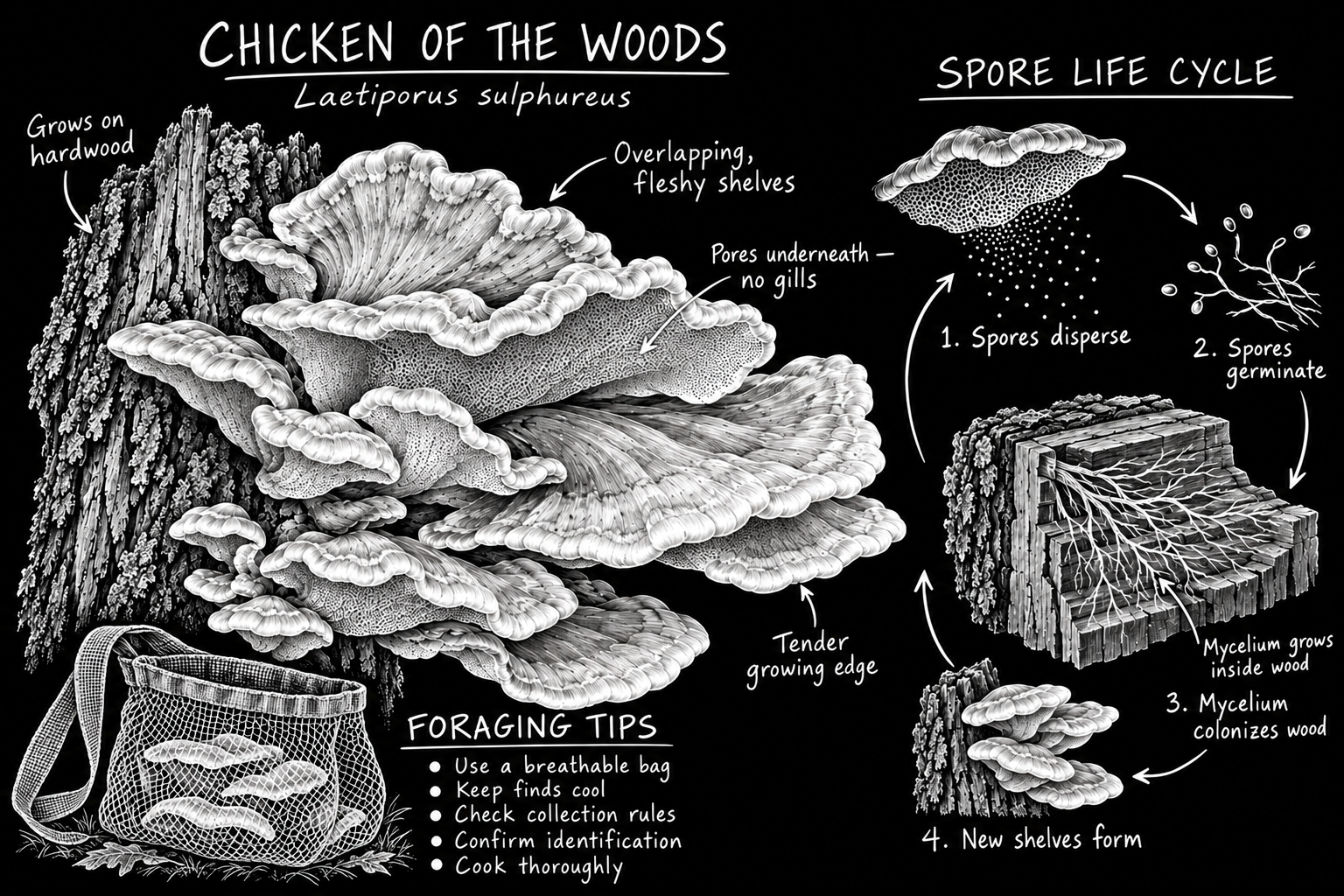
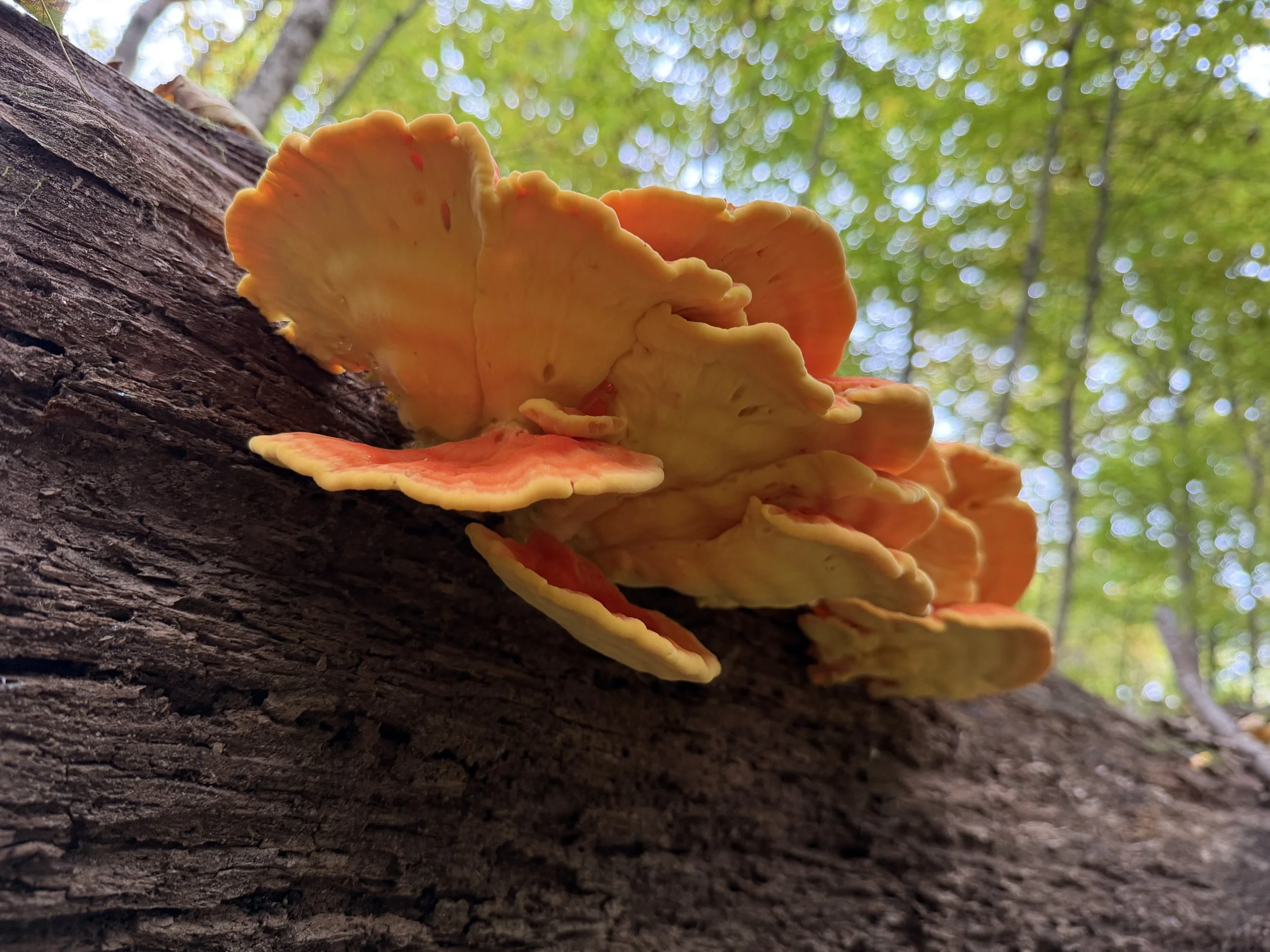
Chicken of the woods is one of those mushrooms that can stop me in my tracks. Its a sudden blast of bright orange shelves in overlapping layers growing on hardwood trunks, fallen logs, and stumps, forming enormous clusters. I’ve found some that were several feet across. I look for them from late spring through fall. You can’t really miss them.
The shelves you can see are the fruiting bodies of a bigger structure inside the wood. A network called mycelium breaks down the tree, drawing food from living or dead wood. When conditions are right, it produces mushrooms that release spores through tiny pores underneath their shelves. Those spores establish new colonies elsewhere, but an established fungus may produce fresh clusters on the same tree for years.
Its reputation as an edible mushroom still comes with a few conditions. Take the time to correctly and confidently identify your find using expert sources. Look for environmental contaminants too. Cook it, don’t eat it raw, and try just a little the first time. Some people are sensitive and can have reactions.
Foragers prize chicken of the woods for its size and firm, chicken-like texture, hence the name. Younger outer ring growth is the best eating. The older shelves are tough and leathery, especially near their attachment to the tree. I personally don’t forage or eat these but they are reputed to be a great substitute for chicken in recipes. I’ll have to try it sometime.
NOTE: Laetiporus cincinnatus, the white-pored chicken of the woods, forms peach-orange rosettes near oak roots and has a local connection: mycologist Andrew Price Morgan first described it from the Cincinnati, Ohio, area in 1885.
